advertisement
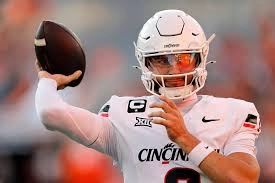
NCAA Gambling Rules EXPLAINED! What Are the Penalties for Sports Betting Violations? Everything You Need to Know After the Sorsby SCANDAL!
Sports betting problems are as old as sports themselves, and college athletics has been no stranger to the CONTROVERSY. The recent news that Texas Tech quarterback Brendan Sorsby will enter a rehab facility for a gambling addiction comes on the heels of a massive college basketball betting scandal that featured numerous players allegedly attempting to influence outcomes. These incidents have put the SPOTLIGHT on the NCAA's rules and penalties regarding sports gambling, and many fans and observers are asking the same question: what exactly are the rules, and how are they enforced?
NCAA President Charlie Baker has attempted to adapt the organization's sanctions on sports betting to current times. Those changes have remained fluid, reflecting the RAPIDLY evolving landscape of sports betting in the United States. Here is where the rules currently stand.
For most of the history of college sports, sports betting of any kind was prohibited and severely punished. In 2022, Virginia Tech linebacker Alan Tisdale was initially suspended for nine games for betting around 400 dollars on the NBA Finals. It was reduced to six games after appeal. The penalty seemed HARSH for a relatively small wager, and it sparked a debate about whether the NCAA's approach to gambling violations was proportionate to the offense.
But in 2023, the Division I Council approved new reinstatement guidelines aimed at reducing penalties for certain types of gambling. Under those 2023 guidelines, any player who bets on their own games or other sports at their own school will potentially face permanent loss of eligibility in all sports. The same applies if a player engages in activities to influence the outcome of his own games or knowingly provides information to people in sports betting. These are the most SERIOUS violations, and the penalties reflect the NCAA's commitment to protecting the integrity of competition.
If a player bets on his own sport at another school, he could lose 50 percent of a season's eligibility. They should also be educated about the rules and prevention of sports wagering. This is a MODERATE penalty that reflects the fact that betting on one's own sport, even at a different school, creates a potential conflict of interest and undermines the integrity of the game.
For other types of betting — such as wagering on professional sports or sports that are not sponsored by the athlete's school — the penalties are less severe but still SIGNIFICANT. Athletes may face suspension and mandatory education, and repeat offenders could face more serious consequences.
The challenge for the NCAA is BALANCING the need to protect the integrity of college sports with the need to treat student-athletes fairly and compassionately. Gambling addiction is a REAL and SERIOUS problem, and the NCAA must ensure that its rules and enforcement mechanisms account for the complex psychological and emotional factors that contribute to addictive behavior.
As the sports betting landscape continues to evolve, the NCAA's rules and penalties will likely continue to change as well. The Sorsby case, and others like it, will force the organization to confront difficult questions about how to handle gambling violations in a way that is fair, consistent, and effective. The INTEGRITY of college sports depends on getting this right.
advertisement
Related Articles
advertisement